In Forsyth County, the Zoning Code Decided Your Lot Size Before You Did
September 24, 2026
September 24, 2026
"Because Res2 districts are generally served by individual septic tanks, maximum density is based on the health requirement that lots must be large enough to accommodate a septic tank drain field and replacement drain field area."
That sentence sits in Chapter 11 of Forsyth County's Unified Development Code, and it explains something most buyers touring homes across the county never quite put together. The reason lots get bigger as you drive north, and the reason South Forsyth commands a premium for less land, isn't really about how far you are from GA-400. It's about what's under the yard.
Ask most people why South Forsyth costs more per square foot than the county's northern reaches, and you'll hear about commute times, proximity to employment centers, or established infrastructure near the Fulton County line. All of that is true. None of it is the mechanism.
The mechanism is written directly into the zoning code. Forsyth County ties how many homes a builder can put on a piece of land to whether that land has access to public sewer. Septic systems need room, not just for the tank and drain field, but for a second drain field in reserve in case the first one fails. That single health requirement is why septic subdivisions are legally required to spread homes farther apart than sewered ones. It's not a builder preference. It's the county's own rule.
Understanding that changes how you read a listing. A big lot in North Forsyth isn't necessarily a lifestyle choice the seller made. It might be the smallest lot the county's own code would allow, given what's running under it.
The county's residential zoning districts lay out the tradeoff in plain numbers. On a Res2 lot served by septic, density tops out at 1.3 homes per acre and lots need to run at least 30,000 square feet. Bring public sewer to that same Res2 parcel and density climbs to 1.5 homes per acre on lots as small as 22,000 square feet. Move up to Res3, and the jump is bigger still, but only because sewer is required to get there at all.
| Zoning District | Sewer Required | Max Density | Minimum Lot Size |
|---|---|---|---|
| Res2 (septic) | No | 1.3 homes/acre | 30,000 sq ft |
| Res2 (sewer) | Yes | 1.5 homes/acre | 22,000 sq ft |
| Res3 | Yes | 1.8 homes/acre | 14,750 sq ft (18,500 avg) |
| CR2 | Yes, 30-acre minimum | 2.0 homes/acre | 10,000 sq ft (16,000 avg) |
Every step up that table is a step toward smaller lots and more rooftops per acre, and every step requires the county to see a public sewer connection first. Septic isn't a lesser option written into the code as an afterthought. It's the default the code assumes when sewer isn't there, and it comes with a built-in ceiling on how tight a subdivision can get.
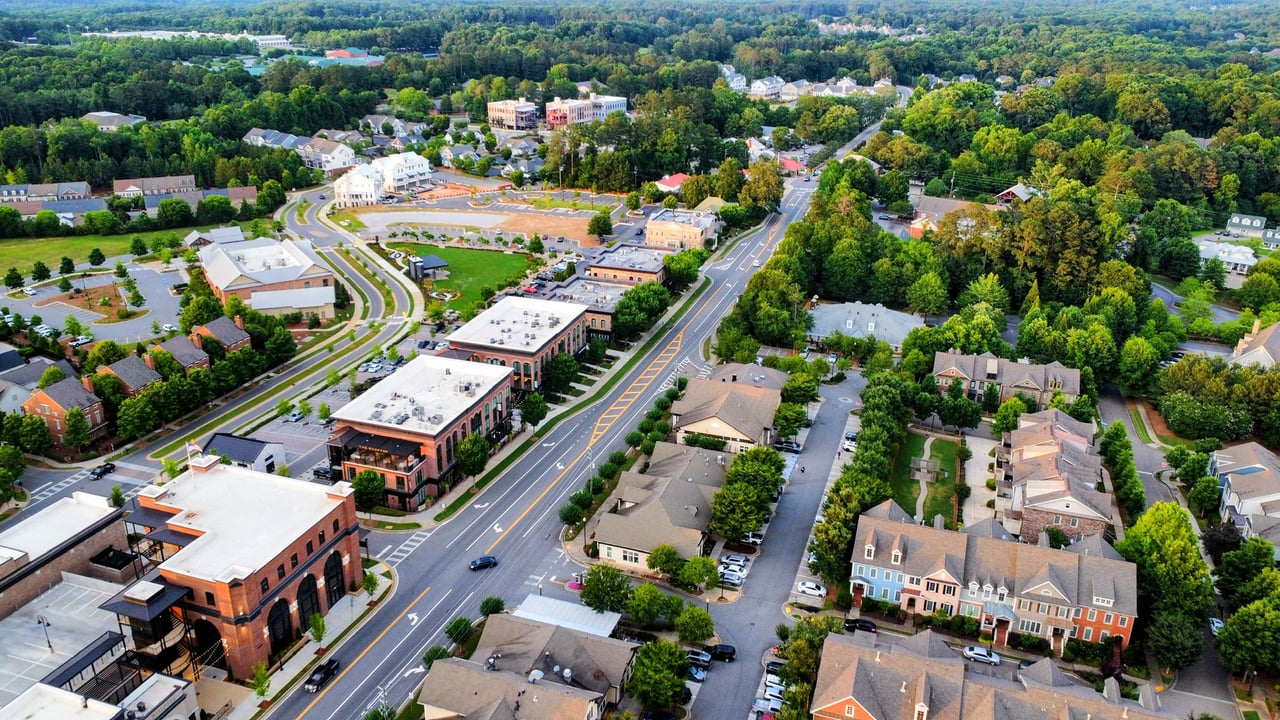
Drive the GA-400 corridor through South Forsyth and you're mostly looking at Res3 and CR2 product, the density tiers the code only unlocks with public sewer in place. Newer communities near Exit 13, like Silverwood and the more limited-run Wayt Farm, are built on that math. Silverwood's single-family plans run in the 3,100 to 3,300 square foot range on a compact footprint, with entry pricing that started in the high-$800,000s when it launched earlier this year. Wayt Farm is smaller by design, a run of roughly 50 homes aimed at move-up buyers rather than a sprawling master plan.
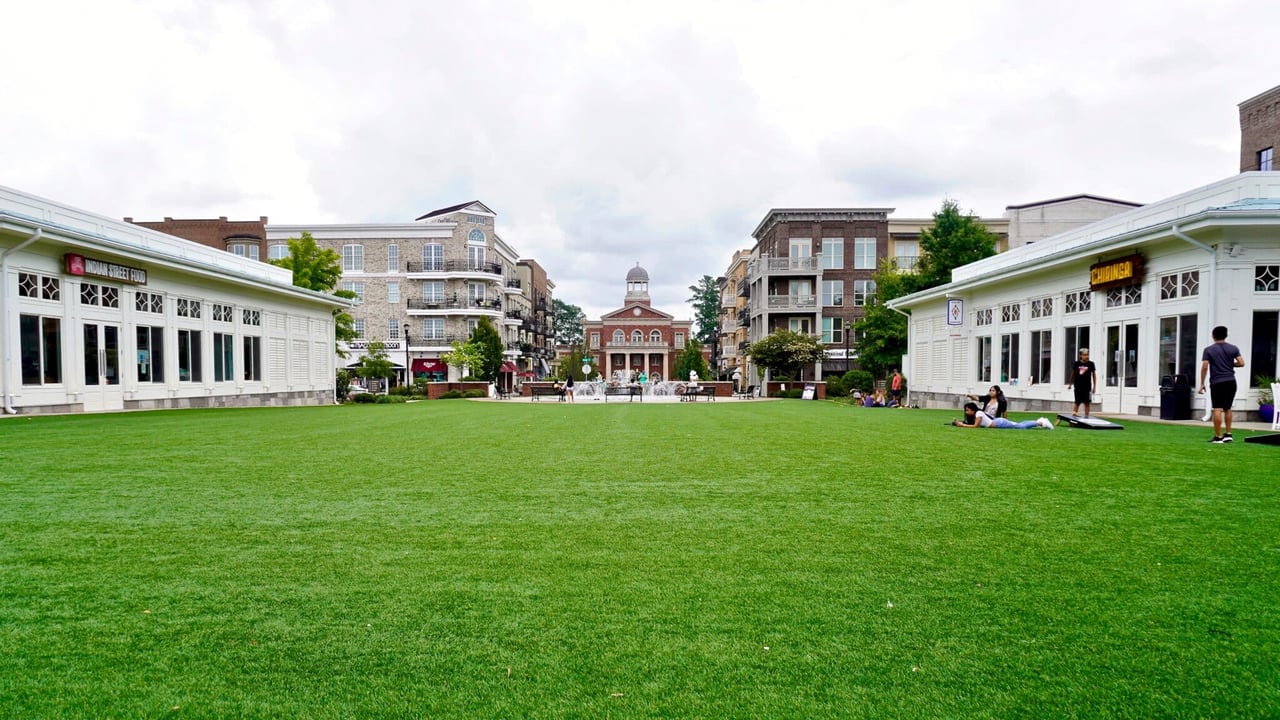
That density lets South Forsyth pack more homes near The Collection at Forsyth and the retail and employment corridor that has grown up around it. It's also why the core of South Forsyth carries a real per-square-foot premium over the county's northern half. You're not just paying for the commute. You're paying for a zoning tier that only exists because the sewer line is already there.
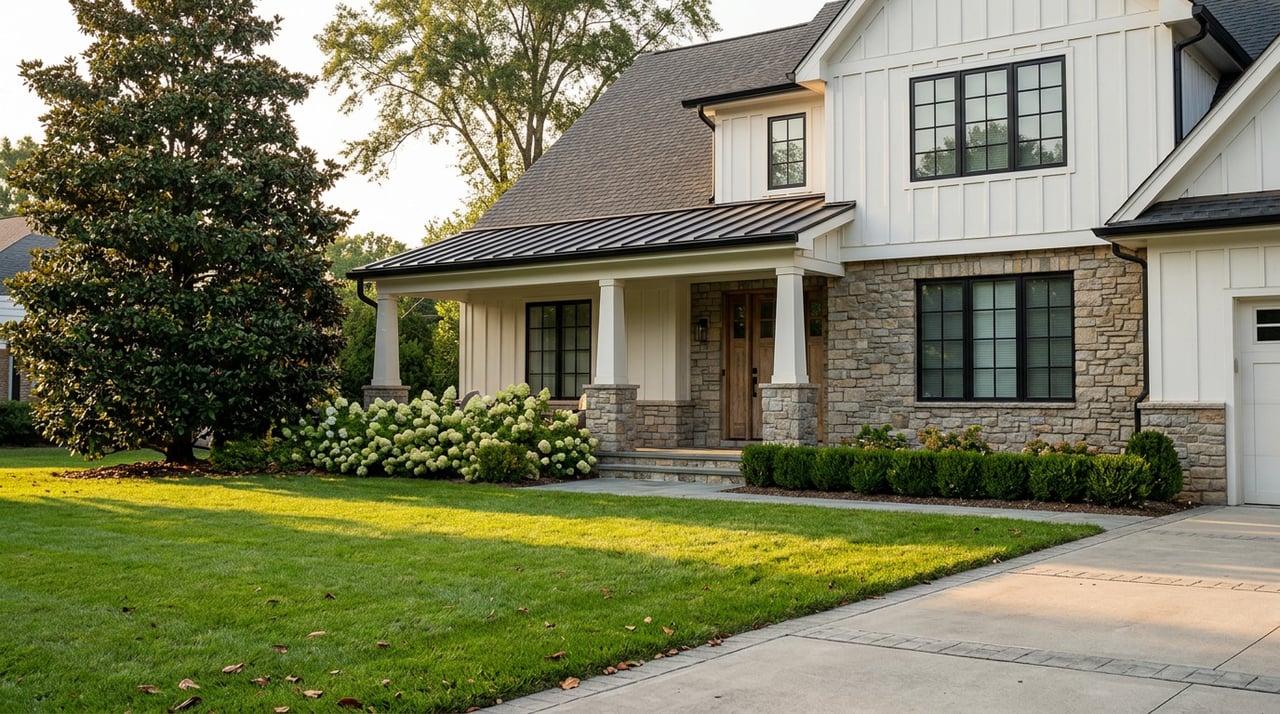
North of Exit 13, the math flips. Communities like Rose Creek, Settingdown Farms, and Northbrooke sit on larger lots because, in a lot of cases, they have to. Rose Creek's entry pricing runs from the mid-$500,000s on homes in the 2,800 to 3,100 square foot range, with HOA dues that bundle in lawn care. Settingdown Farms starts around $600,000 for homes over 3,600 square feet. Northbrooke lands in the high-$500,000s to low-$600,000s. Across the board, the pattern holds: more square footage and more land per dollar than the South Forsyth core, but capped density that keeps these neighborhoods feeling less packed in.
That trade has gotten more pronounced this year. As of September 2026, builders applying for Res3 density in Forsyth are seeing applications denied, withdrawn, or pushed back down to Res2 numbers in nearly every case. The current Board of Commissioners has made slowing residential growth a stated priority, and it's showing up directly in what gets approved. Layer on top of that a countywide moratorium on new residential rezoning applications that runs through October 25, 2026, and you have a market where the zoning code isn't just explaining the North-South divide, it's actively freezing part of it in place until that date passes.
If you're comparing Forsyth County neighborhoods right now, that timeline matters. What gets approved after the moratorium lifts could shift the balance between septic-tier and sewer-tier product in ways that aren't visible yet in today's listings.
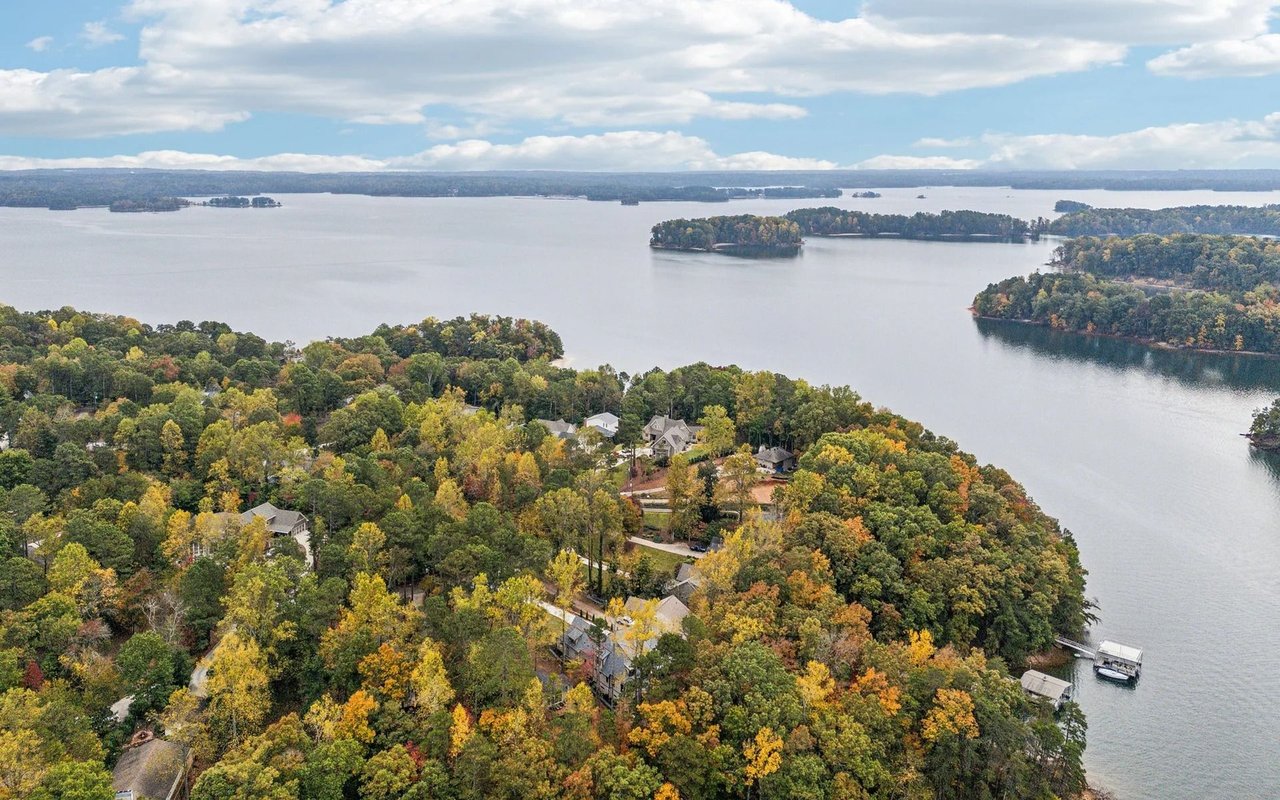
The septic and sewer split doesn't stop at a north-south line. It shows up block by block. Newer subdivisions packed along GA-400 and around The Collection at Forsyth typically sit on public sewer, but step off the main corridor toward the Lake Lanier shoreline, up around Sawnee Mountain, or onto older large-lot parcels scattered through the county, and you're very likely looking at a private septic system instead. Two houses on the same road can be set up completely differently, and neither the listing photos nor the yard will tell you which is which.
The simplest way to check before you fall in love with a house is the utility bill. A monthly sewer charge on the water or county utility account means public sewer. A private well for water almost always means septic on the other end too. If you can't tell from the bill, the county's Environmental Health office keeps septic permits and as-built drawings on file for properties that have them, and Forsyth even runs a Septic Tank Pump-Out Program that credits water customers $100 for getting their tank serviced, a small sign of how normalized septic ownership is here even inside a fast-growing county.
None of this is abstract once you're actually negotiating. Georgia doesn't mandate a point-of-sale septic inspection statewide, and Forsyth hasn't written its own local requirement either, according to the Georgia Department of Public Health. But lenders often make the question moot. D&H Septic Services notes that FHA doesn't automatically require a septic inspection, though the appraiser has to flag visible signs of malfunction like standing water or sewage odor, which frequently triggers one anyway. VA and conventional loans tend to ask for documentation of a functioning system before they'll clear closing.
Budget for a Performance Evaluation Report in the $400 to $600 range if you're buying a septic home, and know that a tank due for pumping adds a few hundred dollars more. If you're planning a pool, an addition, or extra bedrooms on a septic lot, build in time. The county's own guidance notes that reviewing an application for changes to an existing system can take twenty business days or more, which is worth knowing before you fall in love with a floor plan that assumes a fast turnaround.
How do I find out if a specific listing is on septic or sewer before I schedule a showing? Ask your agent to check the water utility account for a sewer line item, or request septic permit records directly from Forsyth County's Environmental Health office if the property has a well or sits outside a newer sewered subdivision.
Does the October 25 moratorium affect homes that are already built? No. It applies only to new applications to rezone land into higher-density districts. Resale homes and already-platted subdivisions aren't affected.
Does a septic system mean a home is worth less at resale? Not inherently. What matters more is documentation. A recently pumped tank with clean permit records and a resale-ready inspection tends to move through due diligence without objections, while an undocumented system is what actually gives buyers pause.
Comparing a big lot in North Forsyth against a tighter one near GA-400 isn't really about picking a side of the county. It's about understanding what the zoning code already decided for you, and making sure the property you fall for matches the tradeoff you're actually willing to make. If you want help reading that tradeoff on a specific street or subdivision, Ligas & Co. knows this county down to the utility bill. Start Your Journey with a conversation, or get a sense of where your own numbers stand with a home valuation.
This article is general information, not legal, tax or financial advice. Consult a qualified professional about your situation.
Stay up to date on the latest real estate trends.

October is here, and North Georgia is officially in its fall era — crisp mornings, football, changing leaves and plenty of reasons to get outside and enjoy the season.
Work with a dedicated team that values trust, communication, and helping you feel confident every step of the way.