Roswell's Walk Score Is 22. Near Canton Street, Buyers Pay Like It's Not.
August 27, 2026
August 27, 2026
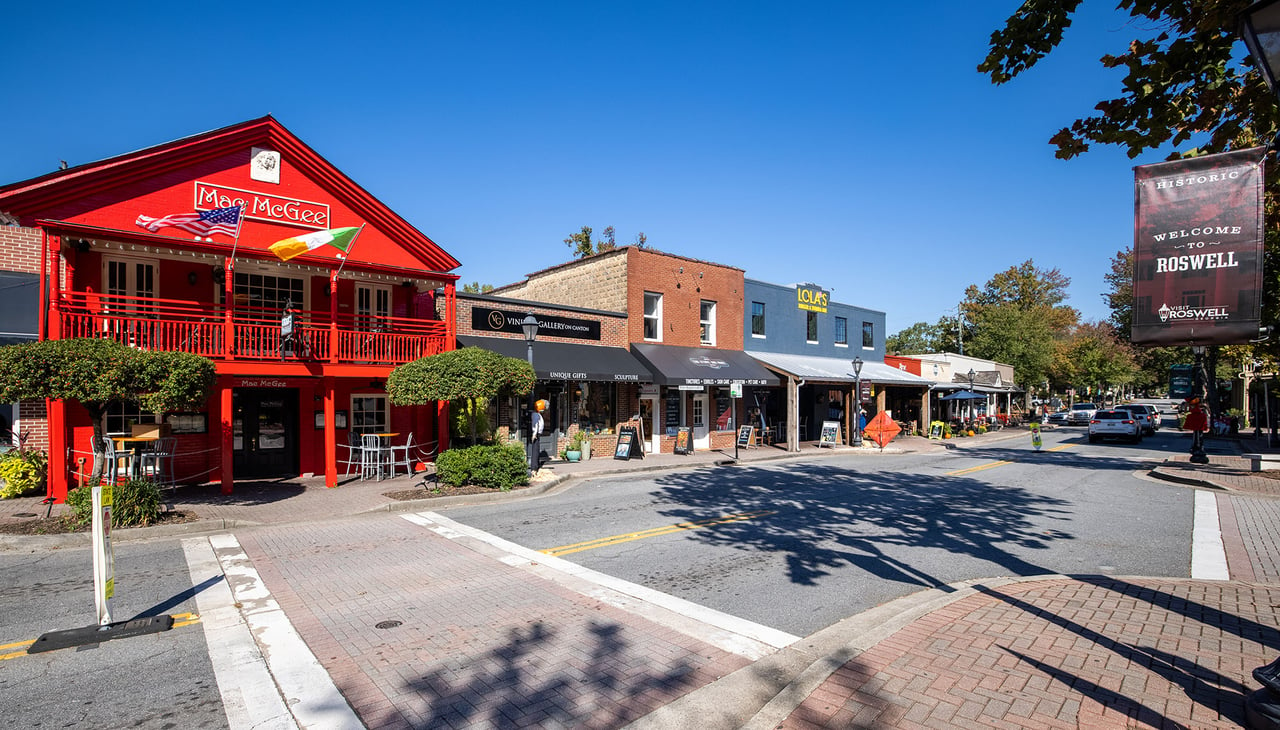
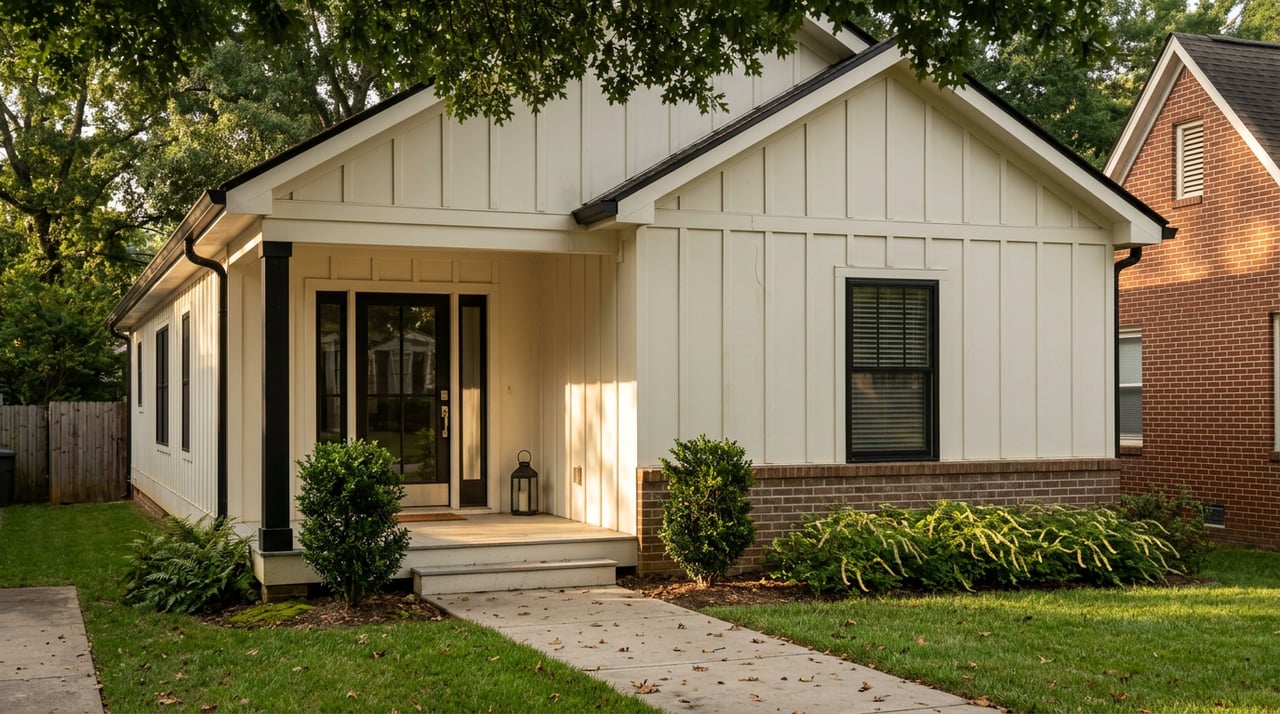
Redfin rates Roswell a 22 out of 100 on its Walk Score, the kind of number that puts a city firmly in car-dependent territory. Almost every errand here means getting behind the wheel. And yet within a few blocks of Canton Street, builders are tearing down modest ranch homes and putting up new construction priced between $700,000 and $1.1 million, on lots no bigger than the ones they replaced, according to Roswell-based brokerage reporting on the local infill market as of March 2026. Buyers aren't just tolerating the smaller lot and the higher price per square foot. They're competing for it.
That gap is the story. A city that mostly requires a car is charging a premium for the one sliver of itself where you don't need one. If you're comparing Roswell to Cumming, Alpharetta, or anywhere else in North Fulton, understanding why that premium exists, and what it does and doesn't buy you, matters more than the citywide median price ever will.
Two policy decisions shape how new housing can be added near the walkable core.
The first is a 2022 city decision to stop approving standalone apartment developments in Roswell, a change reported by Urbanize Atlanta when it covered the recent opening of the Averly East Village apartments. New multifamily projects since then have had to come in as part of larger mixed-use rezonings rather than as apartment communities on their own. This limits one route for adding walkable housing near downtown: a new apartment building a block off Canton Street would need to be part of a larger mixed-use rezoning.
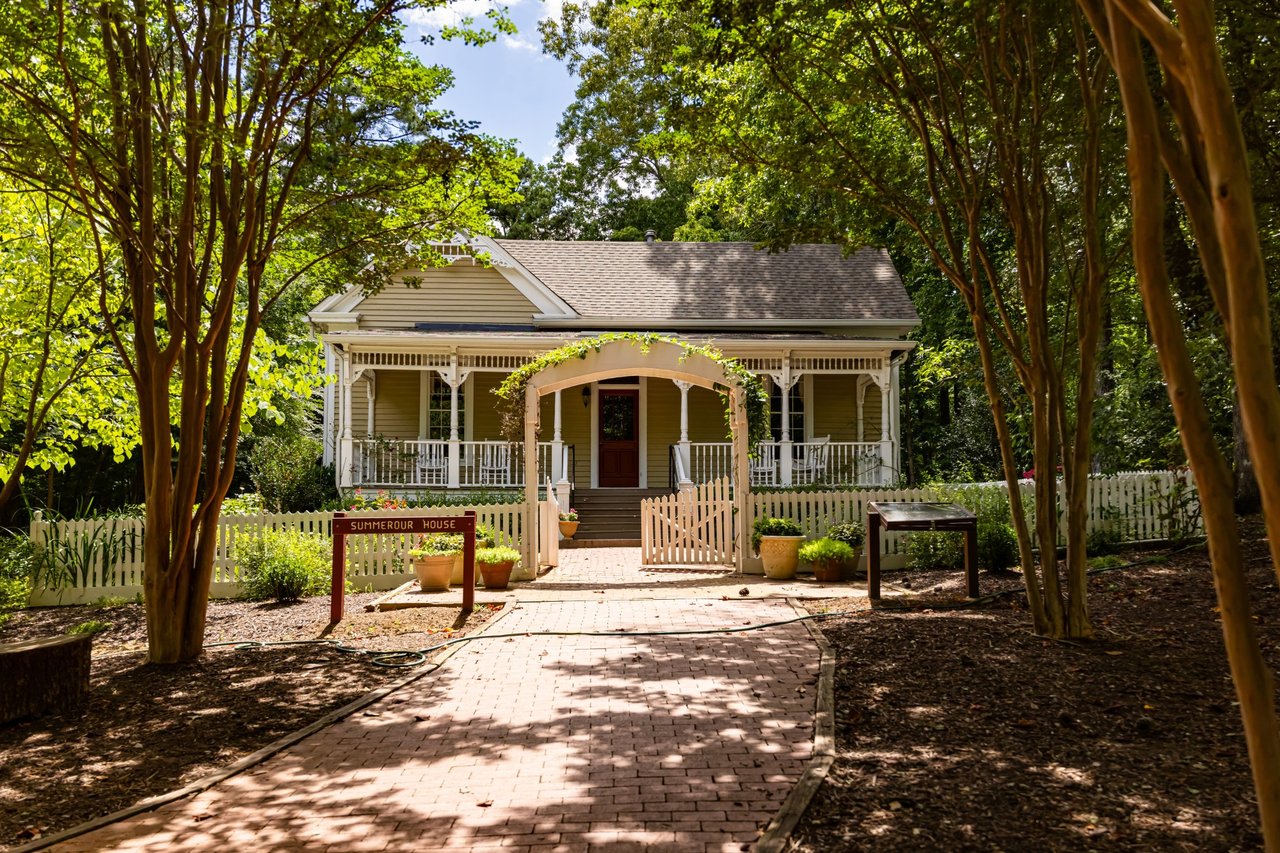
The second is the Historic Preservation Commission. Roswell's zoning ordinance requires a Certificate of Appropriateness before any material change to the exterior of a property inside the Historic District, and the city's own guidance is direct about what happens if you skip that step: work done without approval can lead to fines, permit delays, and a forced reversal of the alteration. A 2014 opinion from the Georgia Attorney General's office, written specifically about Roswell's ordinance, confirms the Commission's authority covers most exterior changes to historic properties, though state law puts exterior paint color outside its reach.
Together, these policies shape how new housing can be added near the walkable core: exterior changes in the Historic District are subject to review, and multifamily development must be part of a larger mixed-use rezoning. Teardown-rebuild projects on existing lots are one way new homes are being added, as the examples below show.
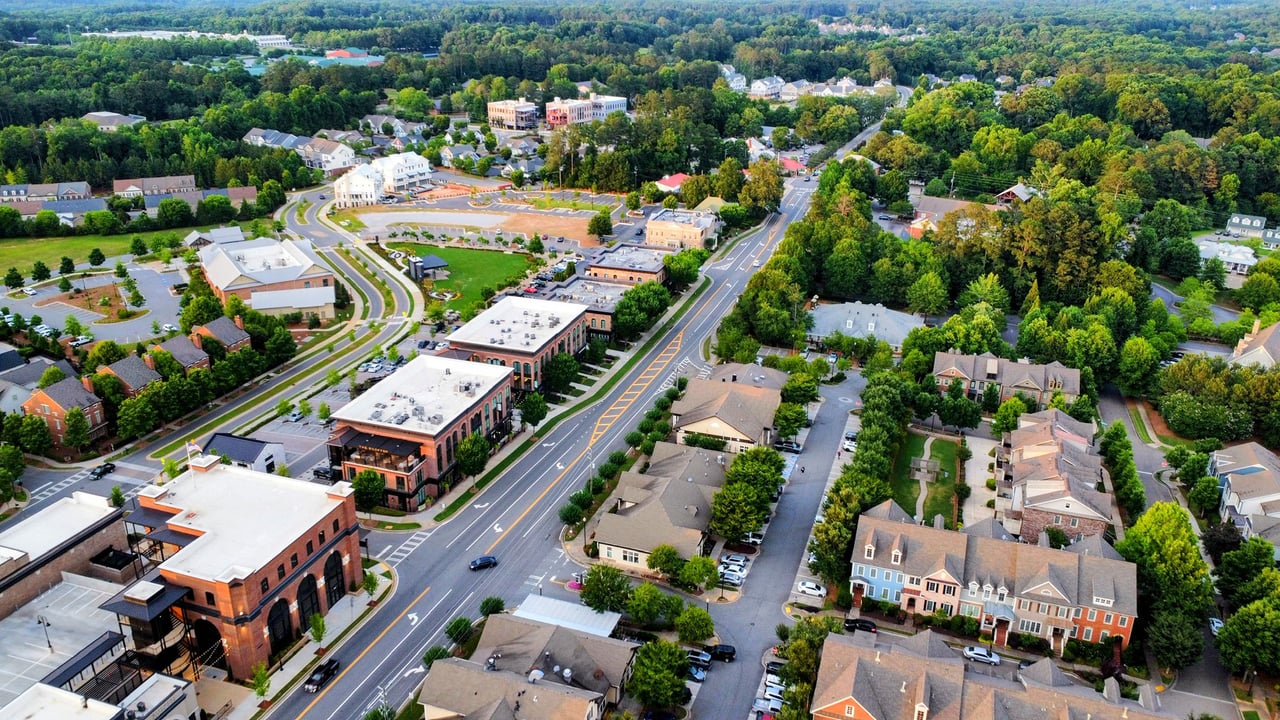
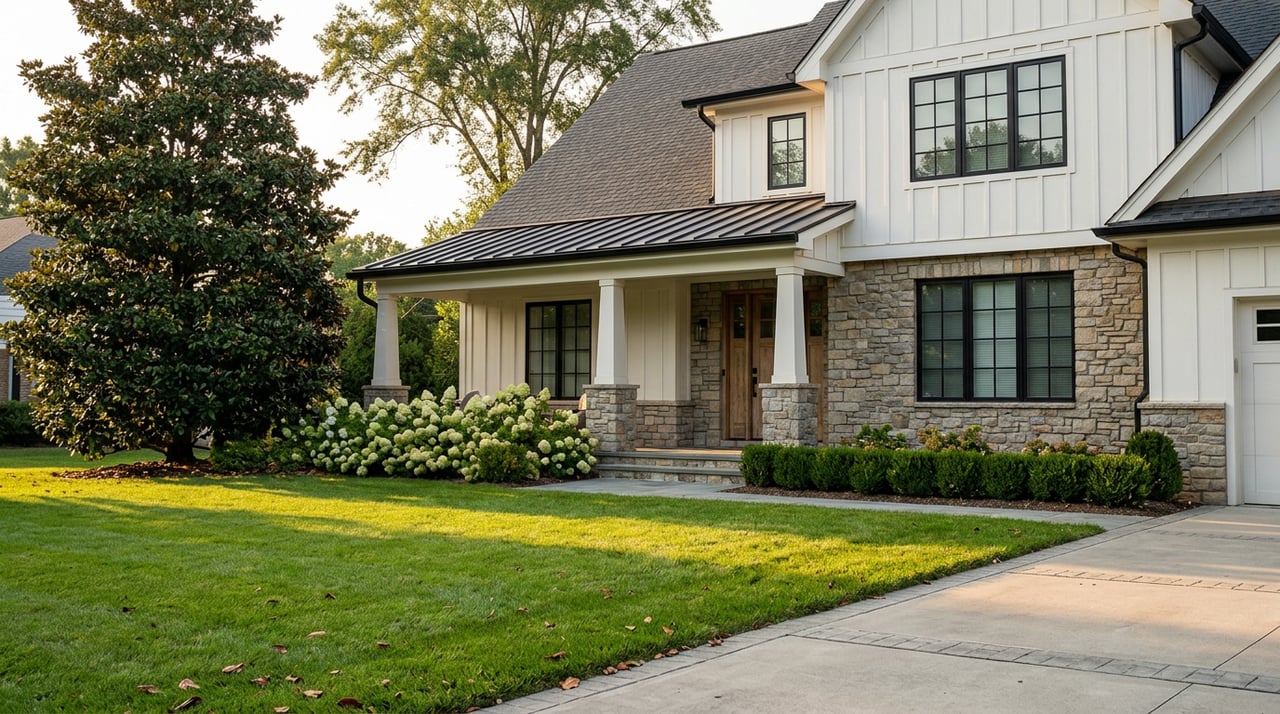
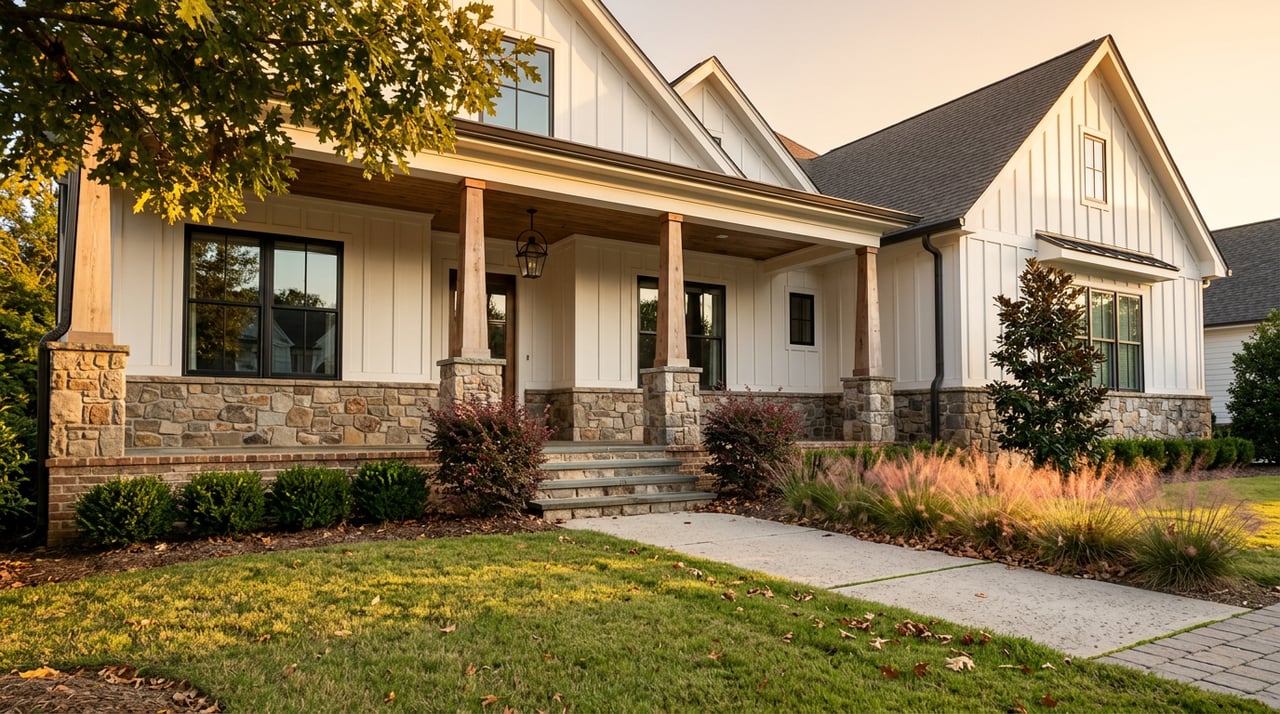
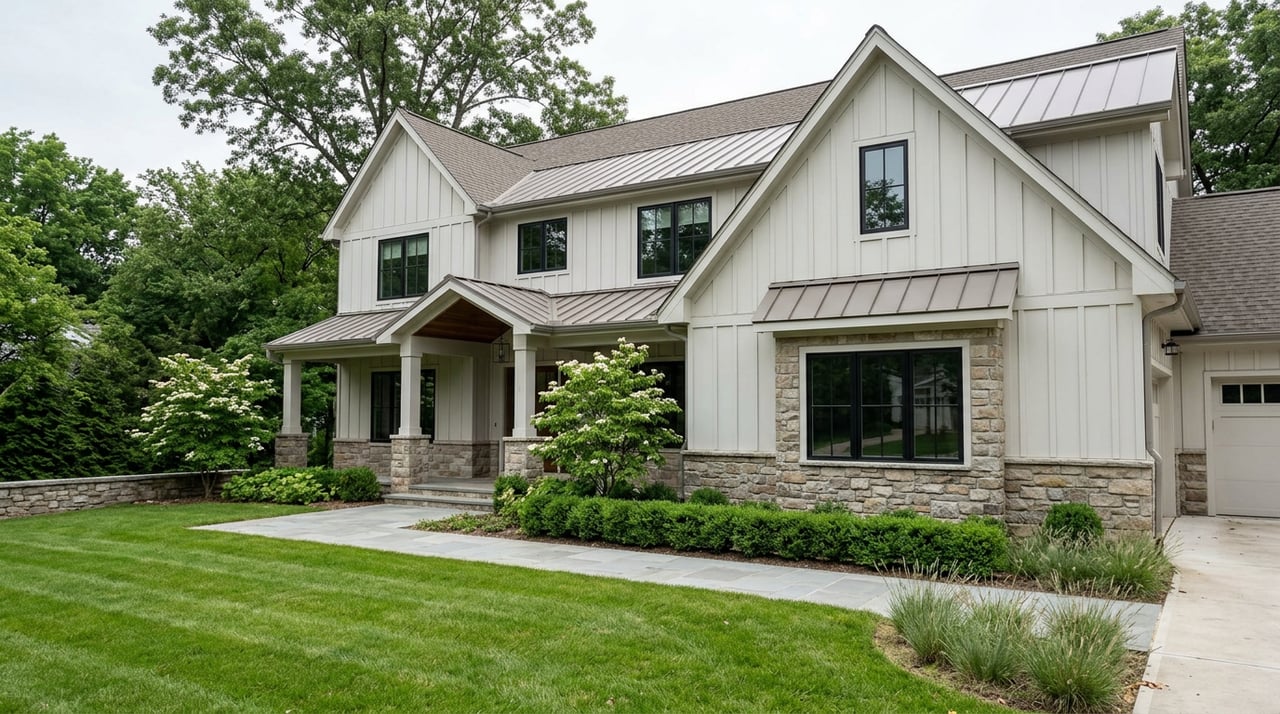
Builders active in this pocket are replacing older homes with three- and four-bedroom infill product priced from $700,000 to $1.1 million, according to the same local brokerage reporting from March 2026. Compare that to new construction going up along the Holcomb Bridge corridor and near Crabapple, which starts in the mid-$600,000s on larger, subdivision-style lots.
That's not a small gap for similar square footage. It's the price of location, and specifically of being able to walk to Canton Street's restaurants and shops rather than drive to them. Builders know it. One recent townhome community near downtown markets itself as the only new construction of its kind within walking distance of Canton Street, and a Charleston-inspired project called Hillandale, built by Patrick Malloy Communities inside the Historic District, leans on the same pitch: gas lanterns, pebble sidewalks, and a walk instead of a drive to dinner.
Here's a way to see the two markets side by side.
| Historic Core / Near Canton Street | Subdivisions East & West of GA-400 | |
|---|---|---|
| Access to Canton Street | On foot | A short drive |
| New construction starting price | Roughly $700K-$1.1M (small infill lots) | Mid-$600Ks and up (larger lots) |
| Typical lot | Small, in-fill, tree-shaded | Larger, subdivision-standard |
| Renovation oversight | Certificate of Appropriateness required for material exterior changes (paint excepted) | Standard permitting |
| Housing type | Teardown-rebuild, small-batch townhomes | Established swim/tennis and golf communities |
Neither column is the "better" choice. They're answers to different questions. One buyer is optimizing for a walk to dinner on a Friday night. Another is optimizing for a bigger yard and a quieter renovation process. The market prices both, just very differently.
Growth pressure in Roswell is real. You can see it about five miles southeast of downtown, where ECI Group and Phoenix Capital opened Averly East Village in 2025, a $101 million project on Holcomb Bridge Road that replaced a shopping center once anchored by a Super Target. The 335-unit apartment community launched with about 70 percent of its units already leased, evidence that plenty of people want to live in Roswell without necessarily needing to live within walking distance of the historic district.
That project only happened because it was structured as part of a mixed-use rezoning approved back in 2019, before the 2022 ban on standalone apartments took effect. It's a useful contrast: East Roswell is where the city has room to absorb new residents at scale. The walkable core, by design and by history, is not.
Roswell's overall housing market reads as balanced. Houzeo's read of the market in January 2026 put the citywide median at $602,500, with homes taking 77 days to sell, 3.9 months of supply on the ground, and a notable rise in price reductions to 24 percent of listings, up from under 17 percent a year earlier. Redfin's February 2026 numbers told a similar balanced story: a median sale price of $645,000 at $239 per square foot, with homes selling in 47 days, down from 52 days the year before. By August 2026, Movoto had the citywide median list price at $699,000, working out to $242 per square foot.
None of those numbers describe what it costs to buy something you can walk to.
A citywide median tells you almost nothing about what a specific block costs to reach on foot.
That's the real lesson in the spread between roughly $240 per square foot citywide and the $700,000-to-$1.1-million range for small, walkable infill lots. The city as a whole is behaving like a normal, moderately competitive suburban market, with price cuts and months of supply to prove it. The pocket around Canton Street has a different profile, shaped in part by limits on new supply and by the relative scarcity of places in North Fulton County where you can leave the car at home.
If your version of a good Tuesday includes walking to dinner, picking up coffee before a stroll through Old Mill Park, or being able to hit the farmers market without hunting for parking, the historic core is the only part of Roswell built for that, and you should expect to pay for the small lot and plan around a Certificate of Appropriateness before you touch the exterior of an older home.
If a bigger yard, a swim and tennis community, or proximity to East Roswell's golf and country club neighborhoods, including Horseshoe Bend and Willow Springs, matters more than a walk to Canton Street, the subdivisions east and west of GA-400 offer more square footage and more predictable renovation timelines for a comparable or lower price per square foot. You'll drive to dinner. You'll also have more house.
Neither path is a compromise so much as a different answer to what you actually want daily life to look like. Knowing which market you're really shopping in, the citywide one or the much smaller walkable one, is the difference between comparing apples to apples and wondering why two homes with similar square footage carry wildly different price tags.
Does every home in the historic district need city approval before a renovation? Any material change to the exterior appearance of a property inside Roswell's Historic District requires a Certificate of Appropriateness from the Historic Preservation Commission before work begins and before the city will issue a building permit. Exterior paint color is a specific exception under state law.
Is downtown really the only walkable part of Roswell? The city's overall Walk Score is 22, which Redfin categorizes as car-dependent. Local real estate professionals consistently point to the historic core around Canton Street as the one part of the city where daily errands and dining are realistically done on foot.
Are new apartment communities still being approved in Roswell? Not as standalone developments. The city stopped approving standalone apartment communities in 2022. Recent large-scale residential projects, including the Averly East Village on Holcomb Bridge Road, moved forward because they were part of mixed-use rezonings approved before that policy took effect.
Whichever side of GA-400 fits your life better, the number on a listing sheet only tells part of the story. If you're weighing a walk to Canton Street against a bigger lot in Horseshoe Bend or Willow Springs, Ligas & Co. can walk you through what each price actually reflects before you write an offer. Start Your Journey.
This article is general information, not legal, tax or financial advice. Consult a qualified professional about your situation.
Stay up to date on the latest real estate trends.

October is here, and North Georgia is officially in its fall era — crisp mornings, football, changing leaves and plenty of reasons to get outside and enjoy the season.
Work with a dedicated team that values trust, communication, and helping you feel confident every step of the way.