A Cumming, Georgia Neighborhood Overview For Move-Up Buyers
July 16, 2026
July 16, 2026
Thinking about moving up in Cumming? You are not alone. This part of Forsyth County has seen major growth, and that growth has created a wider mix of neighborhood options than many buyers expect. If you want more space, a different setting, or better alignment with your daily routine, this guide will help you understand the main neighborhood patterns in and around Cumming so you can narrow your search with more confidence. Let’s dive in.
Cumming and the surrounding Forsyth County area do not function as one single housing market. Census QuickFacts shows a notable difference between Cumming city and Forsyth County overall, including owner-occupancy rates and median owner-occupied home values. For move-up buyers, that matters because a home closer to the city core may offer a very different setting and feel than a home in the broader county.
Growth is also part of the story. According to the City of Cumming’s comprehensive plan, Forsyth County grew 800% from 1980 to 2020 and was Georgia’s second-fastest-growing county in 2020. The same plan notes that local leaders are balancing that growth with the need for roads, parks, schools, and other infrastructure.
When you are moving up, you usually are not just shopping for a larger house. You may also be looking for a better fit for your commute, easier access to recreation, a different lot size, or a neighborhood pattern that matches the way you want to live day to day.
In Cumming, that often means comparing four broad types of areas discussed in local planning documents:
None is universally better than the others. The right choice depends on your priorities, timeline, and how you want your next home to support your lifestyle.
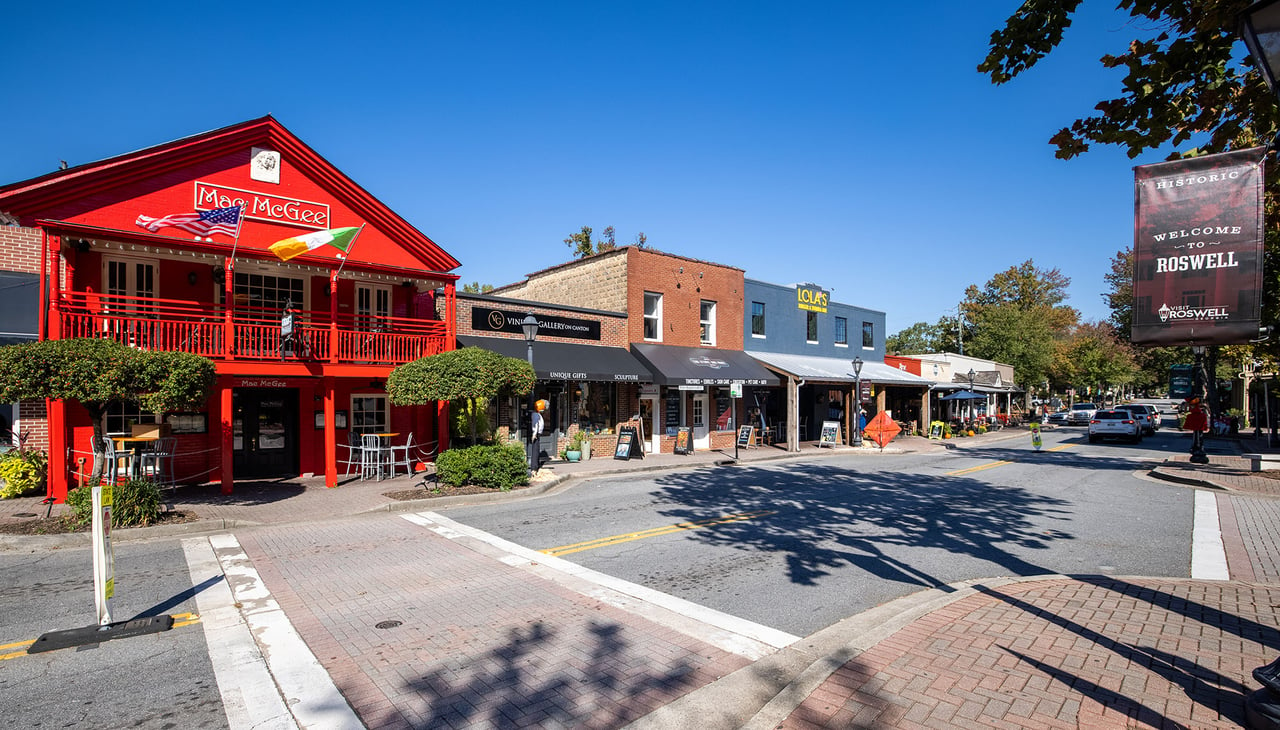
Downtown Cumming offers a more compact, established setting centered around the courthouse square and an older street network. If you want a location with a stronger in-town feel, this area may stand out because it is organized differently from newer suburban neighborhoods.
The city’s transportation plan points to downtown as a key convergence point for several major roads. It also notes that congestion is worst around the courthouse square, which is useful to know if daily traffic flow matters to you. Important access corridors include Main Street, Pirkle Ferry Road, Maple Street, Atlanta Road, Buford Highway, Veterans Memorial Boulevard, Sawnee Drive, Market Place Boulevard, Tribble Gap Road, Castleberry Road, Kelly Mill Road, Buford Dam Road, and Pilgrim Mill Road.
For some move-up buyers, the appeal here is convenience to city amenities and an established setting. For others, the road activity and older street layout may feel less aligned with what they want next. This is a good area to explore if you value being closer to civic and community destinations.
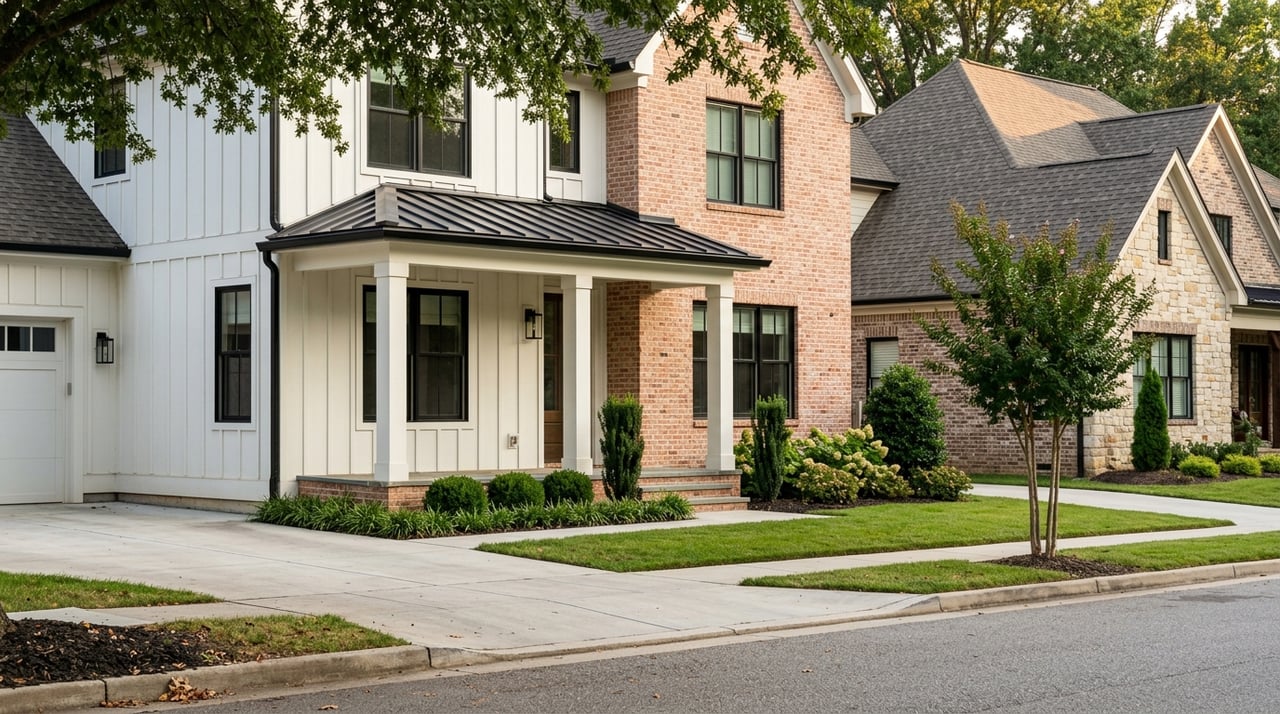
If your move-up vision includes a newer suburban feel, west Cumming and the Vickery Creek area deserve a close look. Forsyth County’s comprehensive plan describes this area as mostly detached, predominantly newer single-family homes with some large agricultural tracts.
The same plan notes that many subdivisions in Vickery have an equestrian-community feel and that the area includes a mixed-use commercial node. That combination can appeal to buyers who want a neighborhood environment with newer housing patterns while still having some nearby services and gathering points.
For buyers moving from a starter home, this part of the market may feel like a natural next step. You may find the overall neighborhood design, lot layout, and home style better matched to the kind of space and setting many move-up buyers want.
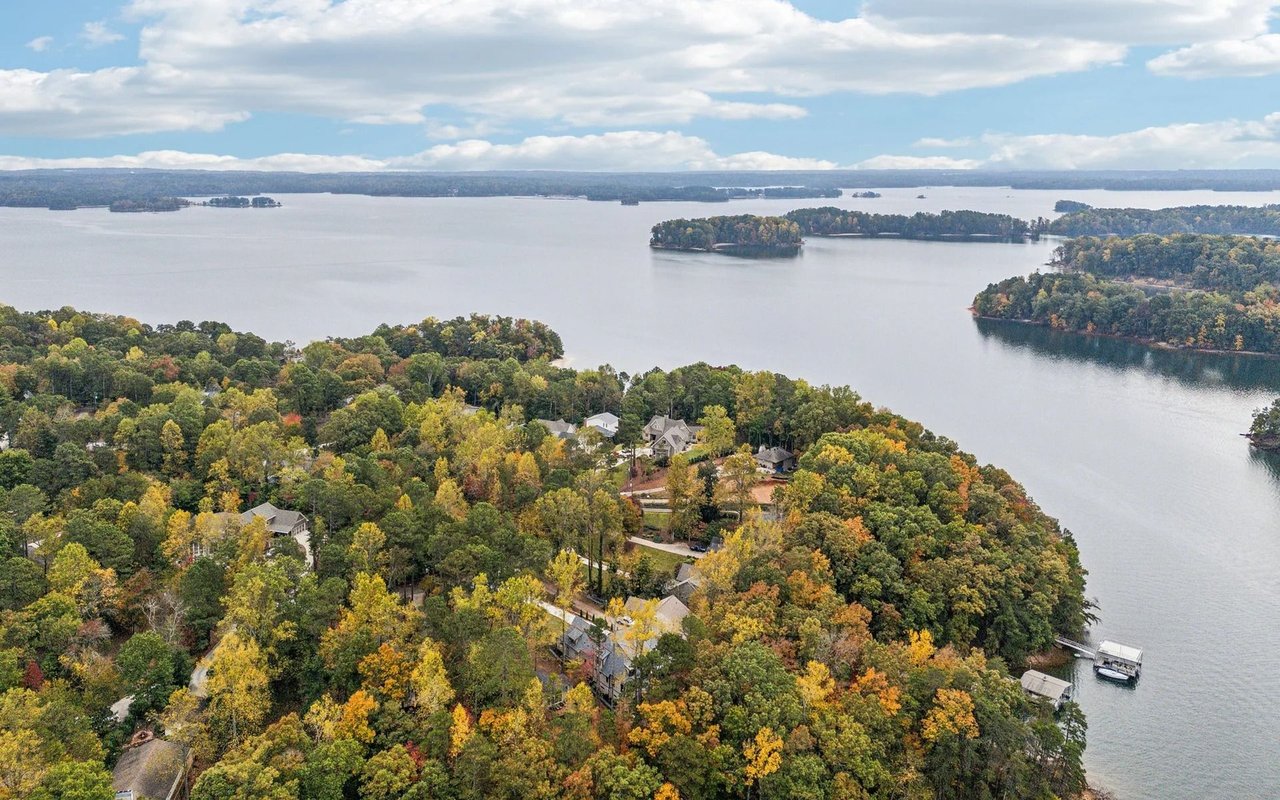
If outdoor access plays a big role in your decision, lake-adjacent areas near Cumming may be worth exploring. Forsyth County describes its Lanier character area as almost exclusively detached, single-family housing plus conservation land protected by the U.S. Army Corps of Engineers.
The county also says housing in this area is predominantly in older, established communities along Lake Lanier. That can create a different feel from newer subdivisions, with more established neighborhood patterns and a stronger connection to lake access and surrounding natural areas.
The City of Cumming highlights access to Lake Sidney Lanier via Mary Alice Park Road, including beaches, pavilions, and boat ramps. For move-up buyers, this can be a meaningful lifestyle factor, especially if you want your next home to bring you closer to weekends on the water or regular outdoor recreation.
North of downtown, the neighborhood pattern shifts again. Forsyth County describes the North GA 400 character area as a mix of undeveloped and agricultural land, large-lot residential properties, and commercial development at major intersections.
The county also identifies the Sawnee Mountain character area as an important natural and cultural node where residential development should remain lower intensity, with most commercial activity focused in the northern part of the area and around the Coal Mountain node. For buyers who want a little more breathing room, this general pattern may feel appealing.
This part of the market can be a fit if you are looking for larger lots, a less compact setting, or closer access to natural features. It may also suit buyers who are comfortable trading some proximity for a different sense of space.
A move-up purchase is about more than the home itself. In Cumming, amenities can have a real impact on how a neighborhood feels once you are living there.
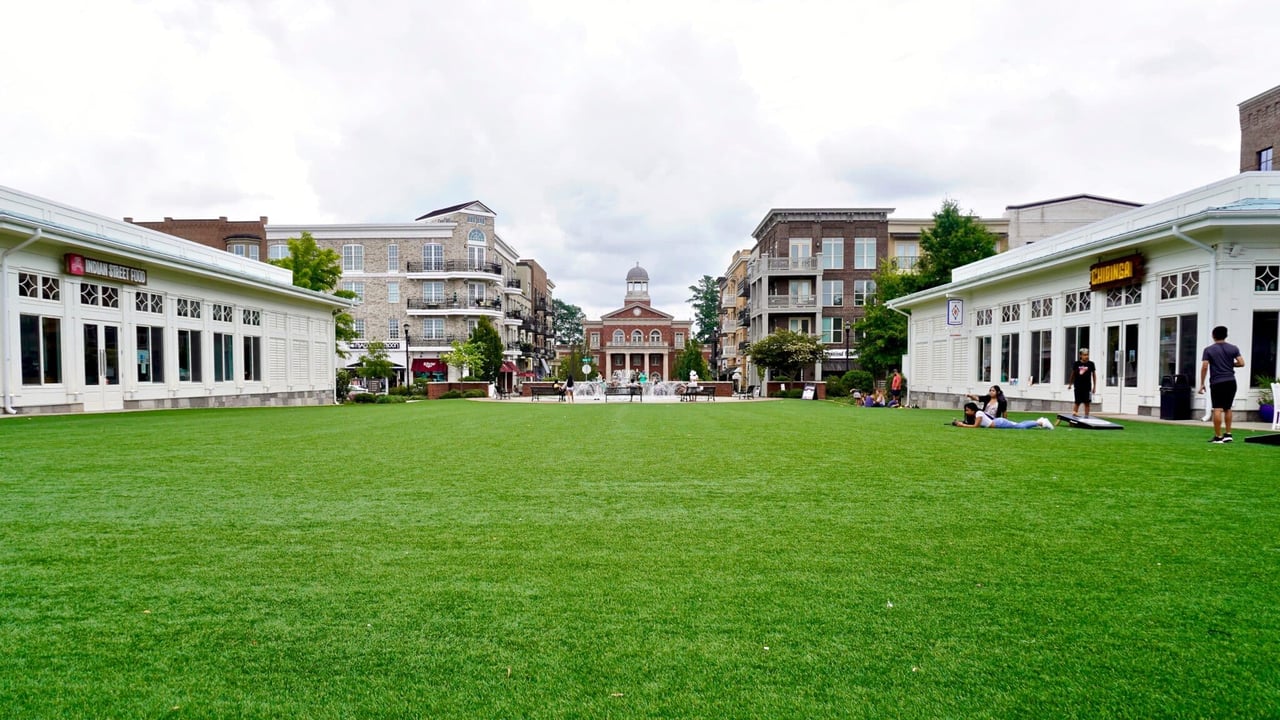
The City of Cumming highlights community destinations such as the Cumming Fairgrounds, Cumming Aquatic Center, City Park, School Street Playhouse, Cumming City Center, and access to Lake Sidney Lanier. The city says the aquatic center includes indoor pools and an outdoor water park, while Cumming City Center offers trails, pocket parks, public art, and local dining and shopping.
Countywide, parks are another major part of the picture. Forsyth County Parks & Recreation’s 2024 annual report says the system includes 23 active parks, 16 passive parks, 14 lake parks, and 55 miles of trails. Depending on the location, amenities can include fields, courts, trails, beaches, camping, and boat launch ramps.
Sawnee Mountain Preserve is another important lifestyle anchor. Phase III opened north of downtown at 2505 Bettis Tribble Gap Road, adding to the area’s outdoor options. If access to trails, lake parks, or recreation matters to you, it is worth comparing neighborhoods through that lens, not just by square footage or price.
In Cumming, road access can shape your day as much as the home itself. The city’s plan says no interstate passes through Cumming and that Georgia 400 is the most important road in the city and county, providing access to regional employment centers.
The same plan explains that the area’s low-density pattern has kept residents highly automobile-dependent. That is why feeder roads and corridor access can become a major quality-of-life factor when you compare neighborhoods.
For some buyers, commuter bus access may also matter. Xpress lists Route 401 as the Cumming Park-and-Ride line, operating Monday through Friday between Cumming, Perimeter, and Medical Center. Even in a market where driving is the default, park-and-ride convenience can still be useful depending on your work routine.
For many move-up buyers, school assignment is one factor in a much bigger decision. Forsyth County Schools says the district serves more than 54,000 students across 42 schools and has grown 40% over the past decade.
Just as important, the district directs families to verify attendance zones by address. In practical terms, that means two homes that seem close together may not share the same elementary, middle, or high school assignment.
If school boundaries are part of your search criteria, verify them early in the process. It is one of the simplest ways to avoid surprises as you narrow down neighborhoods.
If you are feeling torn between several parts of Cumming, start with your daily routine instead of your wishlist alone. A beautiful home can still feel like a compromise if the setting does not support the way you live.
Ask yourself:
These questions can help you filter neighborhoods in a practical way. Once you know your priorities, the search usually becomes much clearer.
Cumming offers real variety for move-up buyers, which is good news if you want options. The key is matching the neighborhood pattern, access points, and lifestyle features to what matters most for your next chapter.
If you are planning a move in Cumming or anywhere in Forsyth County, working with a local team who can help you compare neighborhoods, timing, and tradeoffs can make the process feel much more manageable. When you are ready for thoughtful guidance, connect with Ligas & Co.
Stay up to date on the latest real estate trends.



Work with a dedicated team that values trust, communication, and helping you feel confident every step of the way.